There’s a natural instinct to see IT support as a cost to be minimised, which is exactly why traditional “break fix” arrangements, where you pay only when something goes wrong, can look appealing on paper. In practice, this reactive model tends to cost growing businesses far more than a proactive IT alternative, just in ways that are harder to see on an invoice.
The Trouble with “Only Pay When It Breaks”
Break fix support means nobody’s actively watching your systems until something has already failed. That has two obvious consequences. First, small issues that could have been caught early are left to escalate into bigger, more expensive, and more disruptive problems. Second, when something does fail, you’re often queuing behind other emergencies rather than getting prompt attention, because there’s no ongoing relationship or SLA in place, just an ad hoc call out.
The hidden cost is downtime, and downtime is expensive in ways that rarely show up as a single line item. Staff sitting idle, missed client deadlines, lost sales during an outage, and the reputational cost of systems failing at the wrong moment all add up quietly over a year.
What Proactive Support Actually Changes
Proactive IT support flips the model. Instead of waiting for failure, your provider continuously monitors your systems, applies patches and updates before vulnerabilities can be exploited, and looks for early warning signs, a drive filling up, a server running hot, a backup silently failing, before they become full blown incidents.
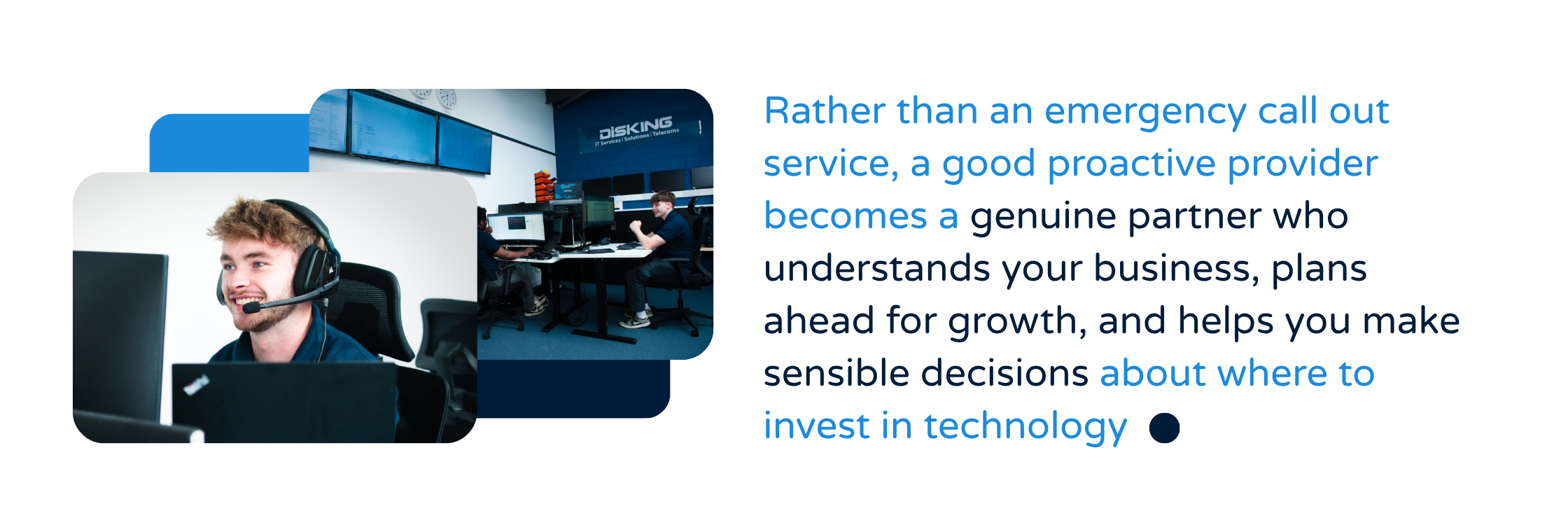
This shift also changes the nature of the relationship. Rather than an emergency call out service, a good proactive provider becomes a genuine technology partner who understands your business, plans ahead for growth, and helps you make sensible decisions about where to invest in technology and where you can safely hold off.
The Business Case, Not Just the Technical One
Proactive support isn’t just about fewer outages, though that matters. It’s about technology actually supporting your growth rather than quietly holding it back. Businesses with reliable, well managed IT can onboard new staff faster, adopt new tools with confidence, and avoid the distraction of firefighting that pulls leadership attention away from running the business.
It also puts you in a stronger position for compliance and client requirements. Cyber Essentials, cyber insurance, and increasingly clients themselves expect to see evidence of proactive patch management, monitoring, and backup testing, not just a promise that someone will turn up if things go wrong.
Making the Switch
If your business has relied on reactive, break fix support until now, moving to a proactive model doesn’t need to be disruptive. A good provider will start with an honest assessment of your current environment, identify quick wins and bigger gaps, and roll out proper monitoring and management in a planned, low disruption way.
See What Proactive Support Would Look Like for You
Disking IT has provided proactive, managed IT support to Hampshire and Surrey businesses for 37 years, combining ongoing monitoring and strategic planning with hands on expertise when things do need fixing. Get in touch for a free consultation, or read more about our Managed IT Services.

Frequently Asked Questions
Isn’t break fix support cheaper for a small business? It can look cheaper month to month, but the hidden costs of downtime, escalated problems, and slower response during emergencies often make it more expensive over a year than a predictable proactive support contract.
How quickly can problems really be caught before they cause downtime? With proper monitoring in place, many issues, such as failing hardware, low disk space, or unsuccessful backups, can be flagged and resolved before they ever affect your team’s ability to work.
Will moving to proactive support mean a big upfront project? Not necessarily. A good provider will assess your current setup and roll out monitoring and management in a structured, low disruption way, rather than requiring a disruptive all at once changeover.
Does proactive support help with Cyber Essentials or compliance? Yes. Ongoing patch management, monitoring, and tested backups, all part of proactive support, directly support the technical controls that Cyber Essentials and similar frameworks require.
How do I know if my current support is reactive or proactive? A simple test: does your provider contact you about potential issues before you notice them yourself, or do you only hear from them after you’ve raised a problem? If it’s always the latter, you’re likely on a reactive model.
Ready to Stop Reacting and Start Planning Ahead?
Book a free consultation with Disking IT and we’ll assess your current setup and show you what proactive support would change for your business.