Do you buy cyber insurance the same way you buy any other insurance? Fill in a form, tick some boxes about MFA and backups, get a quote, sign, and file it away until next year? It feels like a sensible, responsible thing to have done.
The problem is what happens in the twelve months after that form is signed. IT environments change constantly, new software gets added, a legacy account slips through without MFA, a backup job silently fails for a few weeks and nobody notices. None of that gets reported back to the insurer, because most businesses don’t have anyone whose job it is to notice, let alone report it. The policy on file and the reality of the business drift apart, and the business has no idea until the worst possible moment: when they’re relying on that policy to pay out.
This is the checkbox problem. Cyber insurance without an IT provider actively managing what’s behind it isn’t really protection, it’s a document that might or might not hold up when it’s tested.
Why un-managed cyber insurance actually causes claims to fail
This isn’t a hypothetical risk, but one of the most common, least talked about reasons cyber insurance claims get disputed or rejected.
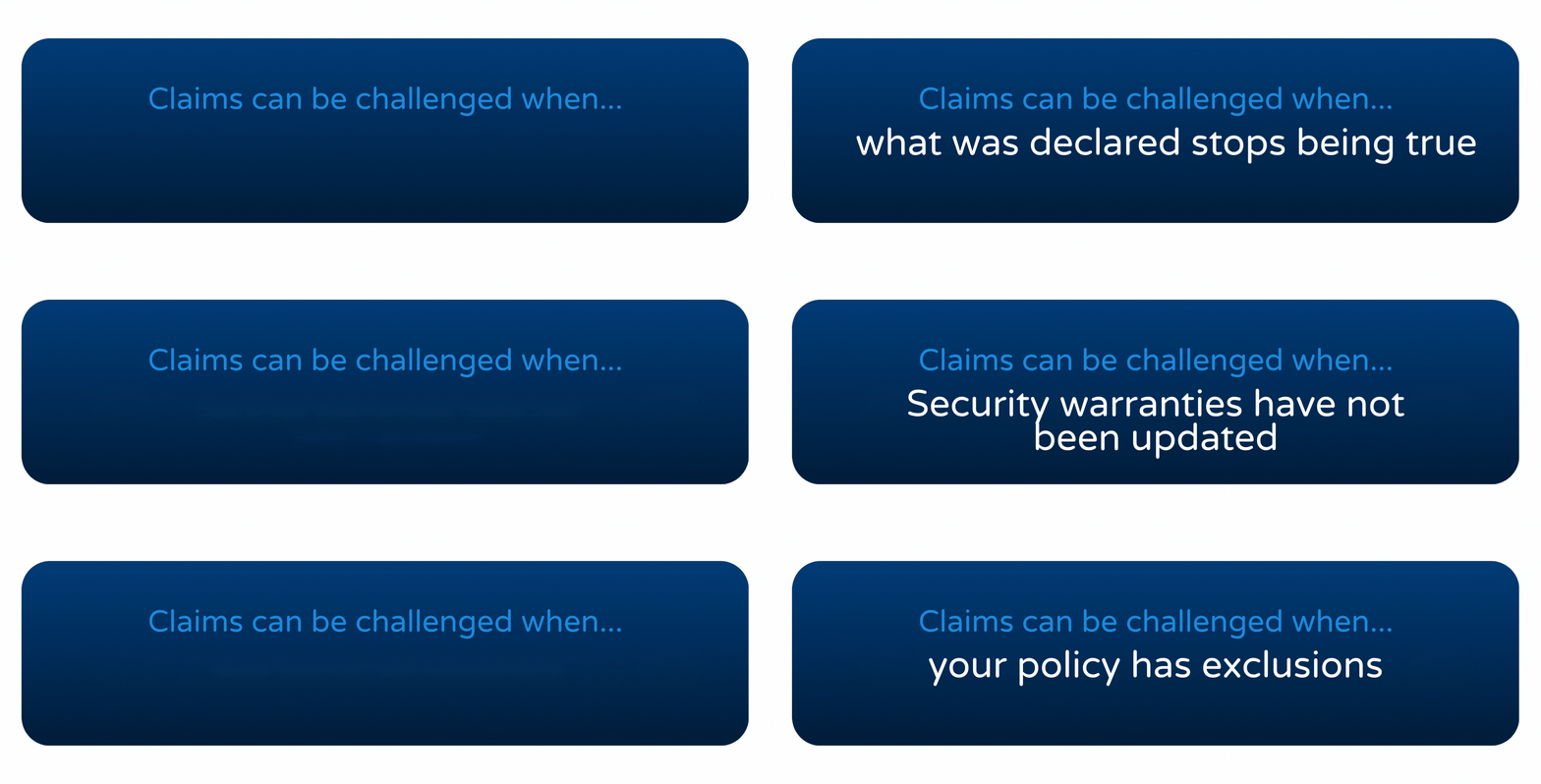
What was declared stops being true. Insurers treat your application answers, MFA enabled, backups tested, systems patched, as ongoing commitments, not a one time snapshot. If the reality has drifted by the time of an incident, that’s grounds to challenge the claim, regardless of intent.
Security warranties aren’t a checkbox, they’re a habit. Many policies require these standards to be maintained for the life of the policy, not just true on application day. Businesses without ongoing IT oversight simply have no way of knowing if they’re still compliant six or twelve months in.
Even the biggest exclusion in the market catches people off guard. Since 2023, Lloyd’s of London has required all its cyber policies to exclude losses from state-backed cyberattacks. This isn’t theoretical: pharmaceutical giant Merck spent years in court after insurers refused to pay a roughly $700 million NotPetya claim, arguing it was a state-sponsored act of war. Merck eventually settled with its insurers in early 2024, but only after a legal fight most SMEs could never afford to have. Understanding what your specific policy does and doesn’t cover matters more than most businesses realise.

How we do it differently
This is exactly the gap our Cyber Insurance for UK Businesses service is built to close, and it works in three parts.
1. We understand your business and your IT, properly, before anything else. We don’t start with a generic form. We start by understanding what your business actually does, what data and systems matter most, and what your IT environment genuinely looks like, not what a form assumes it looks like.
2. We use our partnership with New Dawn Risk to get you the right cover. Working with New Dawn Risk, a specialist cyber insurer that recognises SMEs carry just as much cyber risk as large corporations, we help secure cover that’s built around your actual risk profile, not a one-size-fits-all policy that happens to be the cheapest on a comparison site.
3. We maintain the compliance behind it, on an ongoing basis. This is the part almost nobody else does. Once cover is in place, we keep the security standards behind that policy genuinely maintained, MFA enforced, backups tested, systems patched, so the policy you’re paying for still matches the business you actually run, not just the business you were on the day you signed up.
The result is that cyber insurance stops being a document you hope holds up, and becomes something you can actually rely on, because the business behind it is being kept in a state that matches what was promised.
Cyber insurance is only as good as what’s behind it
Buying the right policy is only half the job. The other half, making sure your business still matches that policy in six months, in a year, at renewal and beyond, is the part almost nobody handles for you. That’s what a managed IT provider actually adds to cyber insurance that a broker alone can’t: someone who understands both the policy and the IT environment behind it, every day, not just at renewal.
If you’re not confident your current cyber insurance would actually hold up if you needed it, that’s worth finding out now. Visit our Cyber Insurance for UK Businesses page to see how we work with New Dawn Risk to get you properly covered, and keep you that way.