No Signal, No Work: How O2 Satellite for Business Closes the Gap
For nearly forty years, we’ve looked after almost every piece of technology our clients rely on: servers, laptops,…
Cyber threats don’t wait for office hours — and most SMEs don’t have the time (or headcount) to run a full security operations function. That’s where our Managed SIEM service comes in.
We deploy and run an outsourced SIEM platform for your organisation, then provide ongoing monitoring, investigation, and response support. You get the outcomes of a Security Operations Centre, without the cost and complexity of building one in-house.
Our focus is simple: reduce risk, detect suspicious activity early, and help you respond quickly and confidently, with clear communication your team can actually act on.
Endpoints are where most attacks begin, phishing clicks, risky downloads, or stolen credentials. Endpoint monitoring flags unusual behaviour early and helps contain threats before they spread.
Servers hold critical data and services, making them a high-value target. Server monitoring highlights suspicious changes and abnormal activity so you can act fast and reduce downtime risk.
Security incidents often begin at the edge—remote access, exposed services, risky outbound traffic, or misconfiguration. Network monitoring helps identify abnormal patterns early and supports faster isolation when needed.
Cloud platforms generate their own risks—risky sign-ins, unusual inbox activity, and oversharing of files. Cloud monitoring improves visibility across email and collaboration so suspicious behaviour is spotted sooner.
Remote work increases exposure—users log in from different networks, locations, and devices. Access monitoring detects unusual sign-ins and helps stop account takeover before it becomes a wider incident.
Compliance visibility means knowing your control posture—patching, policies, and security settings—not guessing. Reporting provides evidence for audits and client questionnaires and supports ongoing improvement.
Single alerts don’t tell the full story—attacks show up as patterns across systems. Centralised visibility correlates events to highlight what matters and support faster, more confident response.
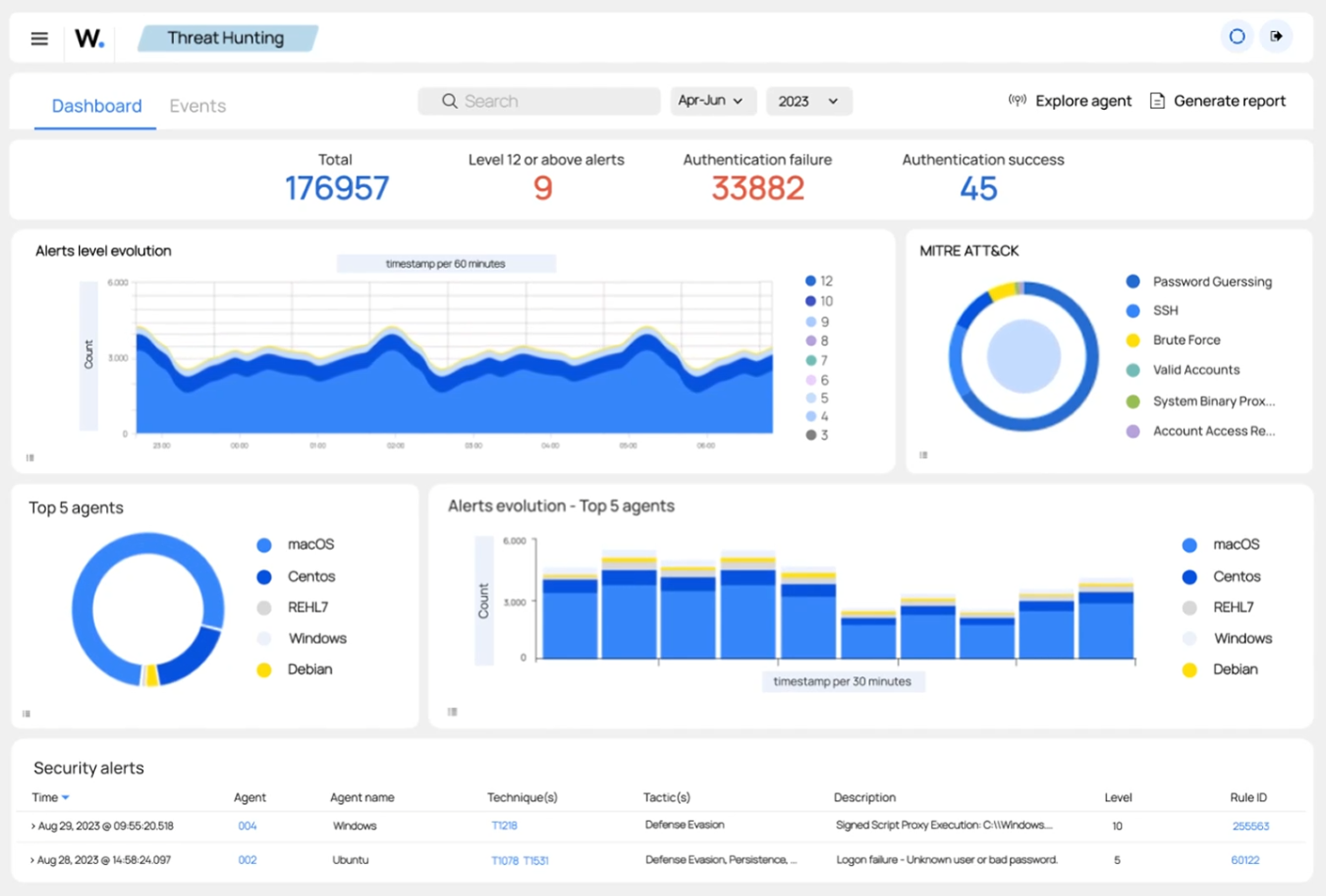
Without managed monitoring, SIEM can quickly become:
We solve that by running it for you, tuning detections, reducing false positives, investigating real threats, and escalating only what matters.
And when something serious happens, speed matters. Early detection and a coordinated response can significantly reduce the impact on operations and recovery time
Did you know? Investigation and response costs can escalate quickly, your own internal material highlights SME forensics and investigation in the first 48 hours can be £25,000–£75,000.
We continuously monitor the environment and focus on high-value security events — not background noise
We tailor detection rules and alerting to your systems, users, and normal behaviour patterns — reducing false positives and improving signal quality.
When an alert fires, we validate it, correlate related activity, and investigate the “story” behind the event — not just the symptom.
You receive a plain-English summary of what’s happening and what actions to take (containment, remediation, and prevention), so your team isn’t left guessing.
Hover over each card to learn more

Read some of our frequently asked questions on our managed SEIM services.
SIEM stands for Security Information and Event Management—a platform and process that centralises logs and security events, then correlates them to detect threats.
Antivirus is mainly endpoint-focused. SIEM correlates activity across endpoints, identities, cloud platforms, and networks, helping detect attacks that slip past single-tool protection.
No. Modern SIEM is increasingly adopted by UK SMEs because cloud adoption and remote work increase risk—without the budget for a full internal SOC.
Common sources include Windows/macOS/Linux endpoints, Microsoft 365/Entra ID, firewalls, VPNs, DNS, Azure/AWS logs, email security, and server/application logs.
Yes— Our SIEM solution can ingest Microsoft 365 identity and security signals to help detect suspicious logins, admin changes, mailbox access anomalies, and risky authentication patterns.
By correlating related events, tuning detections to your environment, suppressing low-value noise, and prioritising incidents that indicate real risk.
Correlation connects multiple small signals—like unusual login + privilege change + suspicious outbound traffic—into a single incident, making threats easier to spot and respond to.
We can provide always-on monitoring, with optional enhanced coverage and SOC-style escalation for customers who need round-the-clock response.
For high-severity detections, we escalate quickly with clear next steps for containment and recovery—so you’re not left interpreting raw alerts.
Yes. SIEM helps detect ransomware indicators such as unusual authentication patterns, privilege escalation, suspicious process activity, and abnormal file changes—especially when combined with endpoint telemetry.
SIEM supports compliance by providing centralised logging, audit trails, detection evidence, and reporting—useful for assurance and continuous improvement programmes.
SIEM is the platform/process for collecting and correlating security events. MDR is a broader managed service that often includes SIEM + endpoint detection + human-led investigation and response.
In most cases, yes—SIEM works best when it connects to the tools you already use, so detections and investigations have full context.
We investigate, validate severity, and escalate with a recommended action plan—containment steps, remediation guidance, and evidence for audits/insurance where appropriate.
For our fully managed clients, we handle everything, from investigation to resolution.
Whether you’re enhancing security, gaining deeper insight from your data, or embracing AI, we’ll guide your next move with clarity & confidence.
For nearly forty years, we’ve looked after almost every piece of technology our clients rely on: servers, laptops,…
PHP2Shell: What the Critical PHP Flaw Means for Your Website and Web Applications If your business has a…
This month, Disking turned 39. Have you known us from the early days, in Farnham, where we were…